

BLOG
From Fiber to Garment: Developing Modacrylic Seamless PPE
[ 21.10.2026]
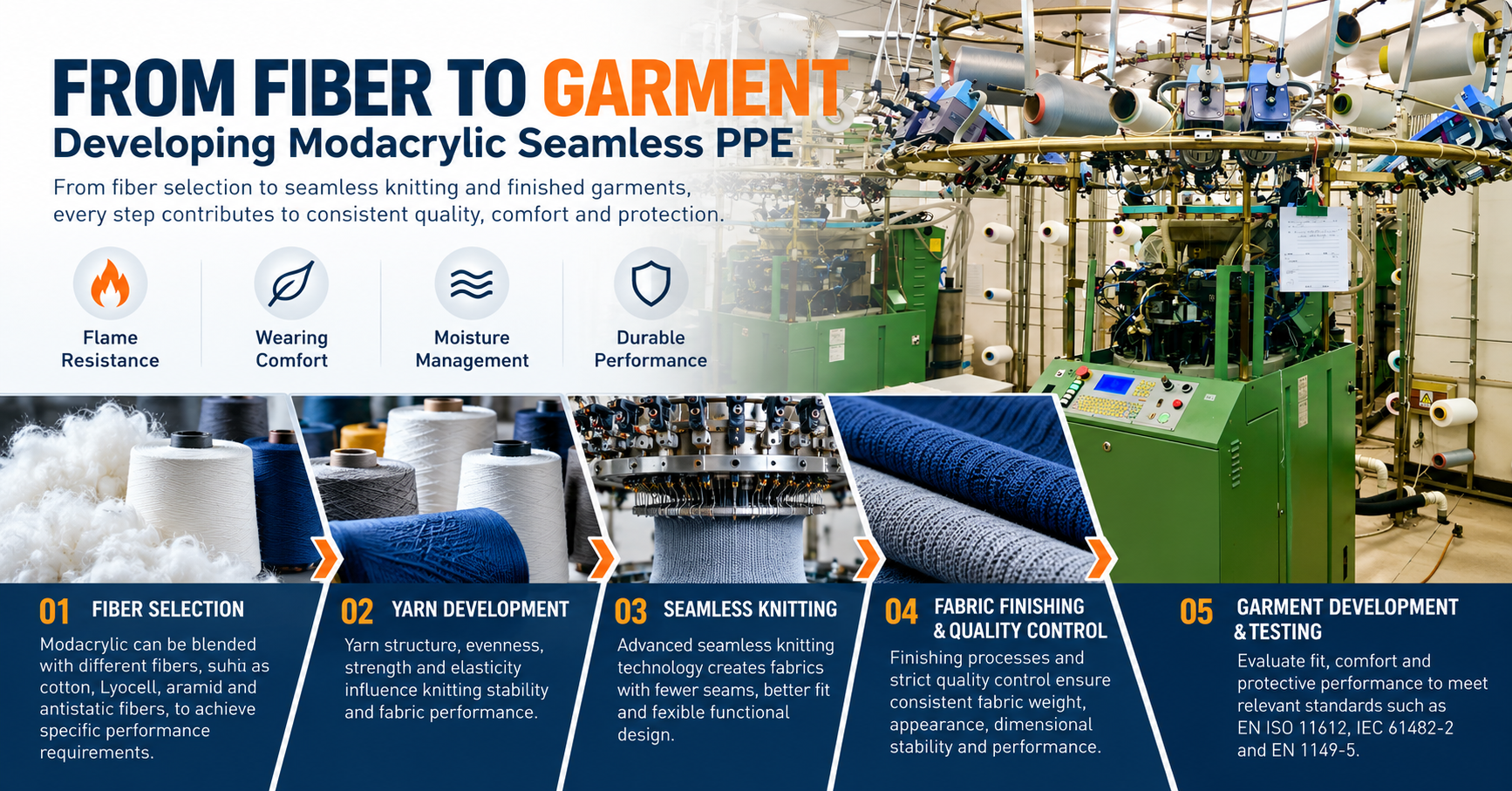
From Fiber to Garment: Developing Modacrylic Seamless PPE
Developing Modacrylic seamless PPE involves more than selecting flame-retardant fibers. Every stage, from yarn development to garment construction, influences the final product’s comfort, consistency, and protective performance.
1. Fiber Selection: Building the Foundation
Modacrylic is widely used in flame-retardant protective clothing because of its inherent flame-retardant properties.
Depending on the application, it can be blended with different fibers, including cotton, Lyocell, aramid, and antistatic fibers. Each combination offers different characteristics in terms of comfort, moisture management, durability, and electrostatic dissipation.
The right blend depends on the intended working environment and the garment’s performance requirements.
2. Yarn Development: Turning Fibers into Functional Materials
Yarn structure and quality are essential for successful seamless knitting. Fiber composition, yarn evenness, strength, and elasticity can all influence knitting stability and fabric consistency.
Before production, yarn specifications should be evaluated to ensure compatibility with the selected knitting equipment and fabric design.
3. Seamless Knitting: Creating the Fabric Structure
Seamless knitting technology allows manufacturers to create garments with fewer seams than conventional cut-and-sew construction.
By adjusting knitting structures and machine settings, manufacturers can develop different fabric zones to support fit, flexibility, and wearer comfort.
However, achieving consistent fabric weight, dimensions, and appearance requires careful control of yarn feeding, stitch length, and machine parameters.
4. Fabric Finishing and Quality Control
After knitting, finishing processes may influence fabric appearance, hand feel, dimensional stability, and overall performance.
Quality control should cover key parameters such as:
- Fabric weight and composition
- Appearance and knitting defects
- Dimensional stability and shrinkage
- Stretch and recovery, where applicable
- Relevant protective performance requirements
Consistent inspection at each stage helps identify potential issues before garment delivery.
5. Garment Development and Performance Testing
The final stage involves evaluating garment fit, construction, and suitability for the intended application.
Depending on the required protection, relevant standards may include:
- EN ISO 11612: Protection against heat and flame.
- IEC 61482-2: Protection against the thermal hazards of an electric arc.
- EN 1149-5: Electrostatic properties of protective clothing.
Compliance cannot be established by fiber composition or knitting technology alone. Appropriate testing and certification must cover the applicable product and intended use.
Conclusion
Developing Modacrylic seamless PPE requires coordinated expertise in fiber selection, yarn engineering, seamless knitting, finishing, and quality assurance.
At Keensun, we develop technical knitted fabrics and seamless FR base layers using different fiber blends and fabric constructions for industrial protective clothing applications.
Looking for a manufacturing partner for your next seamless PPE project?
Visit www.keensunsafety.com or contact info@keensunsafety.com to discuss your requirements.
Keensun — Technical Knitted Solutions for Protective Clothing.
[Back]