

BLOG
What Is EN 1149-5? A Complete Guide to Antistatic Protective Clothing
[ 11.07.2026]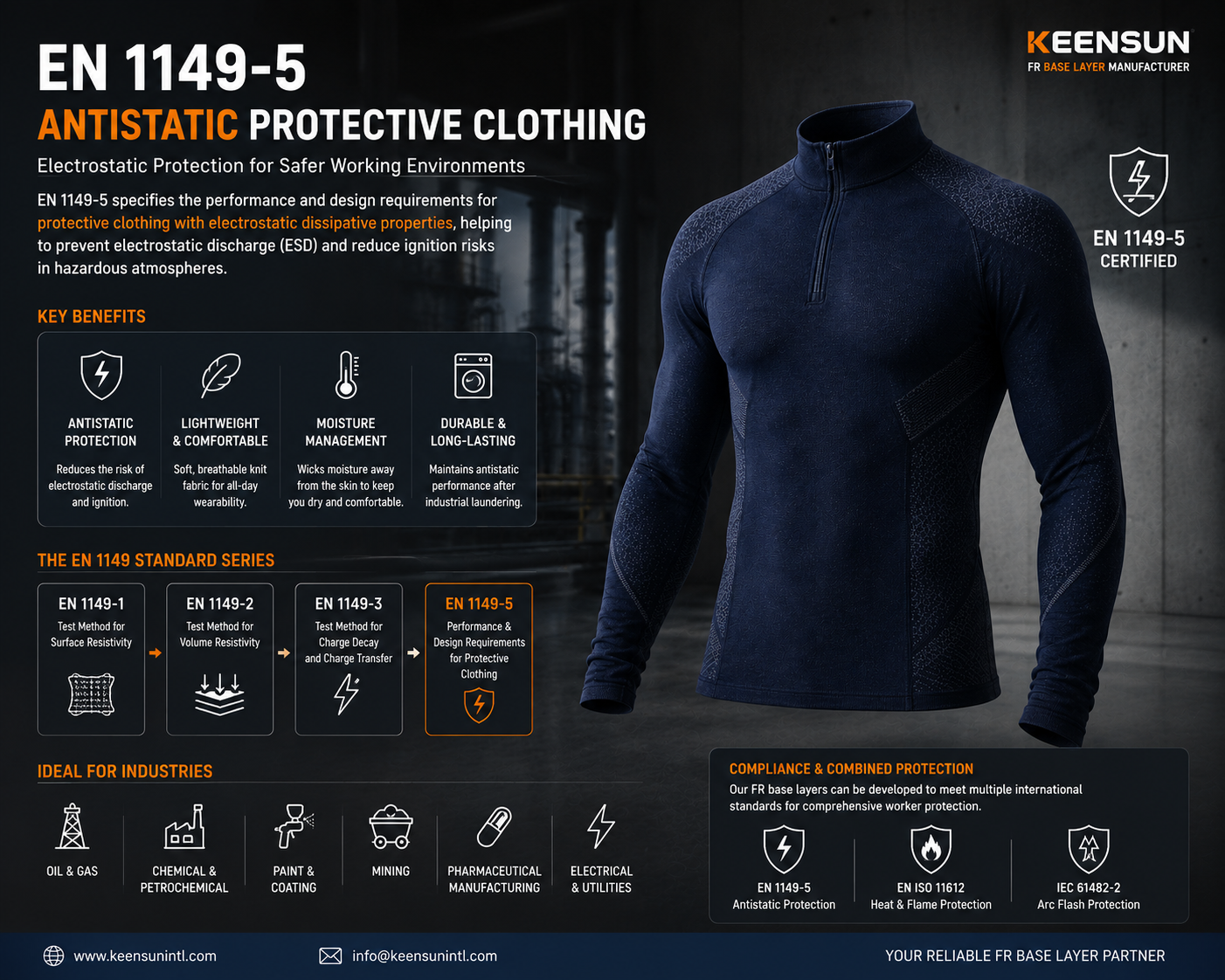
What Is EN 1149-5? A Complete Guide to Antistatic Protective Clothing
Published by Keensun | FR Base Layer Manufacturer
What Is EN 1149-5?
EN 1149-5 is the European standard that specifies the performance and design requirements for protective clothing with electrostatic dissipative properties. It is intended for garments worn in environments where static electricity could create an ignition risk.
Unlike everyday clothing, protective garments certified to EN 1149-5 are designed to minimize the accumulation of electrostatic charges and reduce the possibility of electrostatic discharge (ESD), helping to protect workers in hazardous industrial environments.
This standard is commonly applied to flame-resistant (FR) workwear, arc flash garments, FR base layers, coveralls, jackets, trousers, balaclavas, and other PPE used in industries such as oil & gas, petrochemical, utilities, and chemical processing.
Table of Contents
- What Is EN 1149-5?
- Why Electrostatic Protection Matters
- What Does EN 1149-5 Cover?
- The EN 1149 Standard Series
- EN 1149-5 vs EN ISO 11612
- EN 1149-5 vs IEC 61482-2
- Typical Applications
- How to Choose EN 1149-5 Clothing
- Frequently Asked Questions
Why Electrostatic Protection Matters
Electrostatic discharge may seem harmless in daily life, but in hazardous workplaces it can become an ignition source.
Even a small static spark may ignite:
- Flammable gases
- Solvent vapors
- Combustible dust
- Explosive atmospheres (ATEX)
Because of these risks, workers operating in hazardous environments require garments that help dissipate electrostatic charges safely.
What Does EN 1149-5 Cover?
EN 1149-5 specifies the performance requirements and design requirements for protective clothing with electrostatic dissipative properties.
Unlike laboratory test standards, EN 1149-5 focuses on the finished garment, ensuring that the complete clothing system provides effective electrostatic protection during normal use.
To comply with EN 1149-5, manufacturers must select suitable materials and design garments according to the requirements defined by the standard.
Typical industries include:
- Oil & Gas
- Petrochemical
- Chemical Processing
- Pharmaceutical Manufacturing
- Utilities
- Electrical Maintenance
- Mining
- Paint & Coating
- Grain Handling
- Industrial Manufacturing
Understanding the EN 1149 Standard Series
The EN 1149 family includes several related standards.
| Standard | Purpose |
|---|---|
| EN 1149-1 | Test method for measuring surface resistivity |
| EN 1149-2 | Test method for measuring volume resistance |
| EN 1149-3 | Test methods for charge decay and charge transfer |
| EN 1149-5 | Performance and design requirements for protective clothing |
Simply put:
- EN 1149-1, EN 1149-2 and EN 1149-3 explain how the material is tested.
- EN 1149-5 specifies how the finished garment should perform.
This relationship helps ensure consistent electrostatic protection from fabric testing through to the final certified garment.
EN 1149-5 vs EN ISO 11612
Although both standards are commonly found on FR garments, they protect against different hazards.
| Standard | Protects Against | Typical Applications |
|---|---|---|
| EN 1149-5 | Electrostatic discharge | Chemical plants, ATEX areas, Oil & Gas |
| EN ISO 11612 | Heat and flame | Welding, foundries, industrial heat exposure |
Many industrial garments are certified to both standards because workers may be exposed to multiple hazards simultaneously.
EN 1149-5 vs IEC 61482-2
These two standards are also frequently combined.
| Standard | Protection |
|---|---|
| EN 1149-5 | Electrostatic hazards |
| IEC 61482-2 | Arc flash hazards |
An arc flash garment often incorporates antistatic properties to provide comprehensive protection in electrical working environments.
Typical Garments Certified to EN 1149-5
Garments meeting EN 1149-5 requirements include:
- FR Base Layers
- FR T-Shirts
- FR Polo Shirts
- FR Long Sleeve Shirts
- FR Underwear
- FR Balaclavas
- FR Neck Tubes
- FR Coveralls
- FR Jackets
- FR Trousers
At Keensun, our seamless knitted FR base layers are developed using advanced flame-resistant yarn blends and can be manufactured to meet international PPE requirements, including EN 1149-5, EN ISO 11612, and IEC 61482-2, depending on customer specifications.
How to Choose EN 1149-5 Protective Clothing
When selecting antistatic PPE, consider the following factors:
1. Compliance
Verify that the garment is certified according to EN 1149-5 and meets the relevant PPE regulations for your market.
2. Comfort
Workers often wear PPE for extended periods. Lightweight knitted fabrics and ergonomic construction improve comfort and productivity.
3. Durability
Choose garments designed to maintain their protective performance after repeated industrial laundering.
4. Multiple Hazard Protection
Many workplaces require protection against more than one hazard. Consider garments that combine:
- EN 1149-5
- EN ISO 11612
- IEC 61482-2
for comprehensive worker protection.
Why Modern FR Base Layers Matter
Protective clothing is no longer only about safety.
Today's industrial workers expect garments that also provide:
- Lightweight performance
- Moisture management
- Stretch and mobility
- Soft next-to-skin comfort
- Breathability
- Long service life
This is why seamless FR base layers manufactured with high-performance fibers such as modacrylic blends have become increasingly popular across the PPE industry.
Frequently Asked Questions
What is EN 1149-5?
EN 1149-5 is the European standard specifying the performance and design requirements for protective clothing with electrostatic dissipative properties.
Does EN 1149-5 protect against fire?
No. EN 1149-5 addresses electrostatic hazards. Protection against heat and flame is typically covered by standards such as EN ISO 11612.
Is EN 1149-5 required for Oil & Gas workers?
Many employers in the oil and gas industry require garments certified to EN 1149-5 because electrostatic discharge can ignite flammable gases or vapors.
Can one garment comply with multiple standards?
Yes. Many modern PPE garments are certified to multiple standards, including EN 1149-5, EN ISO 11612, and IEC 61482-2.
What fabrics are commonly used for EN 1149-5 garments?
Protective garments are often manufactured using flame-resistant fiber blends that incorporate conductive or antistatic yarns, providing electrostatic dissipation while maintaining comfort and durability.
Conclusion
EN 1149-5 plays a critical role in protecting workers from electrostatic hazards in industries where flammable gases, vapors, or combustible dust are present. Rather than focusing solely on fabric performance, the standard establishes requirements for the finished garment, ensuring reliable electrostatic protection in real working conditions.
As industrial PPE continues to evolve, manufacturers are increasingly combining EN 1149-5, EN ISO 11612, and IEC 61482-2 into lightweight, comfortable FR base layers and knitted protective garments, giving workers comprehensive protection without compromising comfort.
[Back]