

BLOG
What Is Modacrylic Fiber? Properties, Applications and Benefits in FR Clothing
[ 11.07.2026]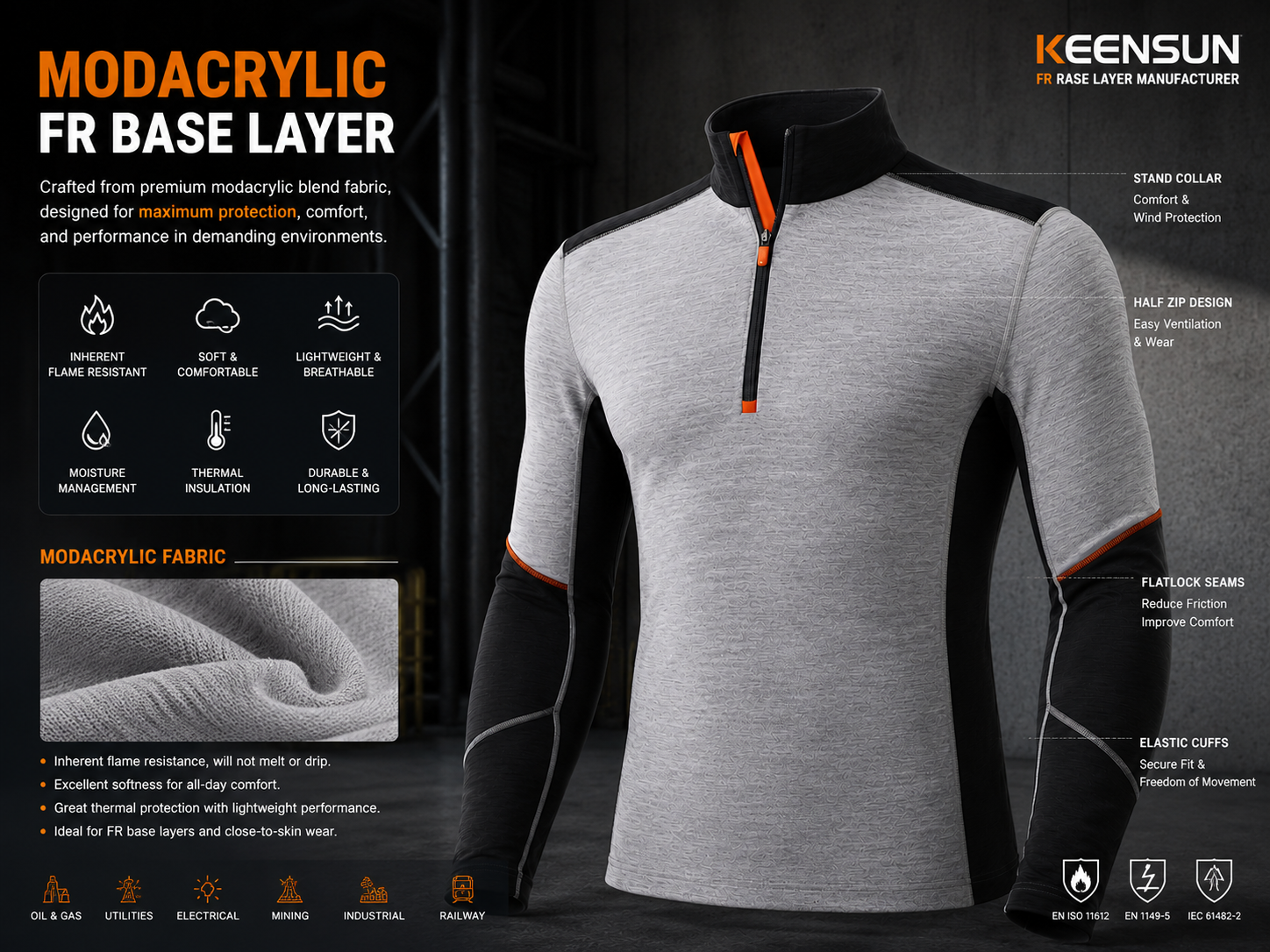
What Is Modacrylic Fiber? A Complete Guide to Flame-Resistant Fabrics for PPE
Published by Keensun | FR Base Layer Manufacturer
What Is Modacrylic Fiber?
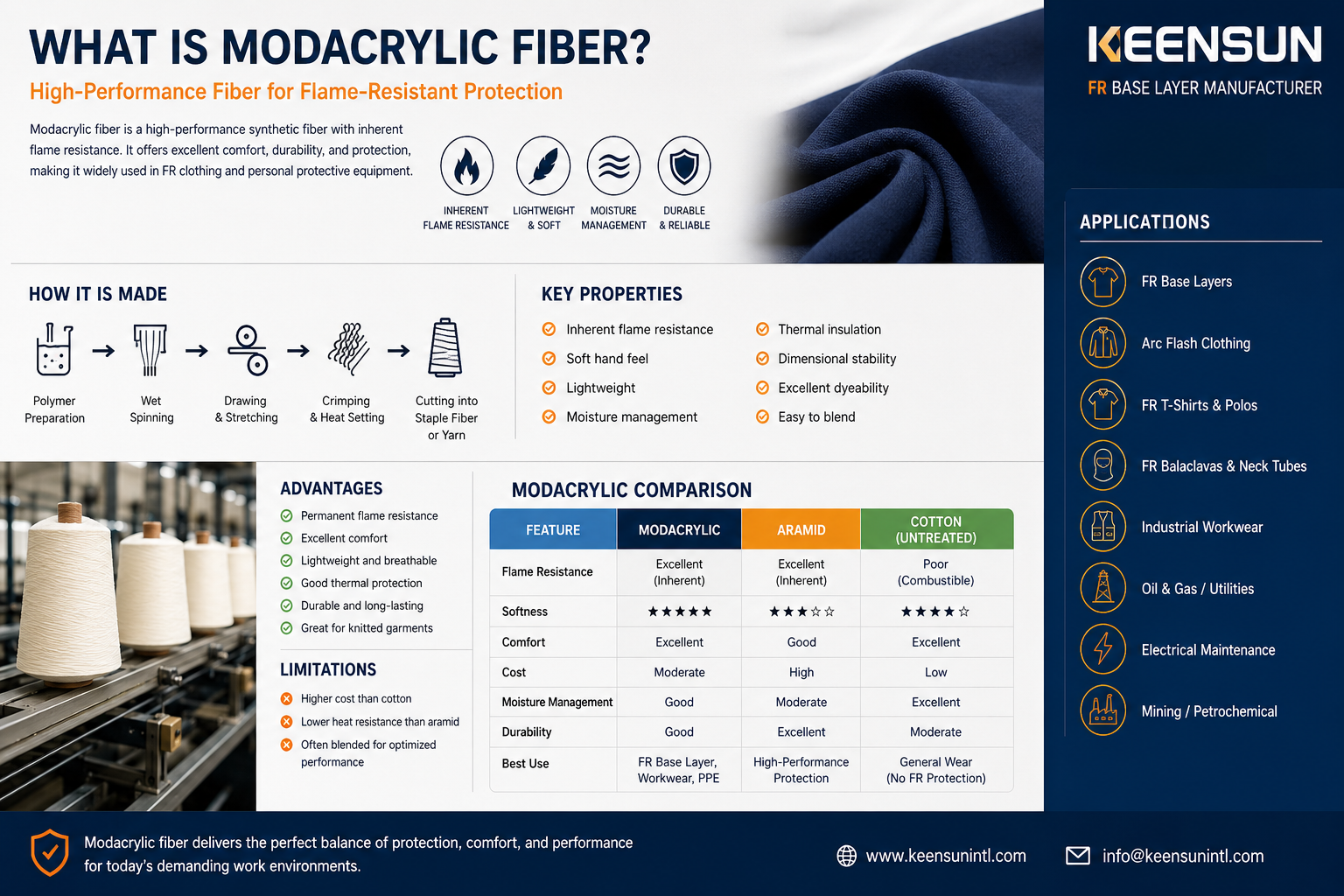
Modacrylic fiber is a high-performance synthetic fiber widely used in flame-resistant (FR) clothing and personal protective equipment (PPE). Unlike chemically treated fabrics, modacrylic offers inherent flame resistance, meaning its protective properties are built into the fiber itself rather than applied as a finish.
This unique characteristic makes modacrylic one of the most trusted materials for workers exposed to heat, flames, and electrical arc hazards. It is commonly found in FR base layers, arc flash garments, industrial workwear, balaclavas, and protective knitwear.
Besides flame resistance, modacrylic is valued for its excellent softness, lightweight feel, moisture management, and long-term durability, making it an ideal fiber for garments worn close to the skin.
Table of Contents
- What Is Modacrylic Fiber?
- History of Modacrylic Fiber
- How Is Modacrylic Fiber Manufactured?
- Key Properties of Modacrylic Fiber
- Advantages of Modacrylic Fiber
- Limitations of Modacrylic Fiber
- Modacrylic vs Aramid
- Modacrylic vs Cotton
- Applications of Modacrylic Fiber
- Why PPE Manufacturers Choose Modacrylic
- Frequently Asked Questions
History of Modacrylic Fiber
Modacrylic fiber was first developed during the 1940s and entered commercial production in the 1950s. Initially, it was widely used in household textiles, faux fur, wigs, and upholstery because of its soft texture and excellent dimensional stability.
As industrial safety standards became increasingly important, manufacturers discovered that modacrylic's inherent flame-resistant properties made it highly suitable for protective clothing.
Today, modacrylic has become one of the most important fibers in the PPE industry and is widely used in sectors such as:
- Oil & Gas
- Utilities
- Electrical Maintenance
- Petrochemical
- Mining
- Railway
- Manufacturing
- Fire Protection
How Is Modacrylic Fiber Manufactured?
Modacrylic fiber is produced using specially engineered acrylic-based polymers containing flame-resistant monomers.
The general manufacturing process includes:
- Polymer preparation
- Wet spinning
- Fiber stretching and drawing
- Crimping
- Heat stabilization
- Cutting into staple fibers or producing continuous filament yarns
The resulting fibers provide permanent flame resistance without requiring chemical after-treatment.
Key Properties of Modacrylic Fiber
| Property | Description |
|---|---|
| Inherent Flame Resistance | Permanent FR protection built into the fiber |
| Soft Hand Feel | Comfortable against the skin |
| Lightweight | Ideal for base layer garments |
| Moisture Management | Helps improve wearer comfort |
| Thermal Insulation | Excellent warmth without excessive weight |
| Dimensional Stability | Maintains shape after repeated washing |
| Blend Compatibility | Easily blended with cotton, viscose, aramid, and antistatic fibers |
| Excellent Dyeability | Produces vibrant and stable colors |
Advantages of Modacrylic Fiber
1. Permanent Flame Resistance
Unlike FR-treated cotton, modacrylic does not rely on chemical finishes. Its flame-resistant performance remains effective throughout the garment's service life.
2. Exceptional Comfort
Modacrylic is significantly softer than many traditional protective fibers, making it an excellent choice for base layers worn throughout long working shifts.
3. Lightweight Construction
The fiber allows manufacturers to produce lightweight protective garments without sacrificing safety performance.
4. Excellent Moisture Management
When blended with fibers such as viscose or cotton, modacrylic fabrics help transport moisture away from the skin, improving comfort in demanding working environments.
5. Excellent Knitting Performance
Modacrylic performs exceptionally well in knitted constructions including:
- Jersey
- Rib
- Interlock
- Piqué
- Seamless knitting
This makes it particularly suitable for modern FR base layers.
Limitations of Modacrylic Fiber
Like every technical fiber, modacrylic also has limitations.
- Higher material cost than conventional cotton
- Lower mechanical strength than para-aramid fibers
- Often blended with other fibers to optimize performance
- Not intended for prolonged direct exposure to extremely high temperatures without appropriate garment construction
Selecting the appropriate fiber blend depends on the specific workplace hazards and certification requirements.
Modacrylic vs Aramid
| Feature | Modacrylic | Aramid |
|---|---|---|
| Flame Resistance | Excellent | Excellent |
| Softness | Excellent | Moderate |
| Comfort | Excellent | Good |
| Cost | Moderate | High |
| Base Layer Comfort | Excellent | Good |
| Mechanical Strength | Moderate | Excellent |
| Knitting Performance | Excellent | Moderate |
While aramid fibers provide exceptional mechanical strength, modacrylic offers superior comfort and softness, making it the preferred choice for many FR base layer applications.
Modacrylic vs Cotton
| Feature | Modacrylic | Cotton |
|---|---|---|
| Flame Resistance | Inherent | Combustible |
| Wash Durability | Permanent | None (unless chemically treated) |
| Comfort | Excellent | Excellent |
| Safety Performance | Excellent | Low |
| Industrial PPE | Highly Recommended | Requires FR Treatment |
FR-treated cotton provides protection through chemical finishing, whereas modacrylic achieves flame resistance naturally through its fiber composition.
Applications of Modacrylic Fiber
Today, modacrylic is widely used in numerous protective products, including:
- FR Base Layers
- Flame Resistant T-Shirts
- Long Sleeve FR Shirts
- FR Polo Shirts
- Arc Flash Clothing
- FR Balaclavas
- FR Neck Tubes
- Seamless Protective Knitwear
- Industrial Workwear
- Military Protective Clothing
- Utility Worker Apparel
- Oil & Gas PPE
Its versatility makes it one of the most important fibers in modern protective clothing systems.
Why PPE Manufacturers Choose Modacrylic
Modern PPE is no longer focused solely on protection. Comfort, mobility, and long-term wearability have become equally important.
For this reason, many leading PPE manufacturers choose modacrylic because it offers:
- Permanent flame resistance
- Excellent wearer comfort
- Lightweight construction
- Superior knitting performance
- Compatibility with seamless garment technology
- Excellent blend flexibility
- Long service life
At Keensun, we specialize in developing FR base layers, seamless knitwear, FR balaclavas, neck tubes, and technical protective garments using premium modacrylic blends designed for demanding industrial environments.
Frequently Asked Questions
Is modacrylic naturally flame resistant?
Yes. Modacrylic is inherently flame resistant, meaning its protective properties are built into the fiber itself and do not rely on chemical treatments.
Is modacrylic better than cotton?
For flame-resistant clothing, yes. Modacrylic offers permanent flame resistance, while untreated cotton is combustible.
Can modacrylic fabrics be washed repeatedly?
Yes. When properly maintained according to garment care instructions, modacrylic retains its flame-resistant performance after repeated laundering.
Is modacrylic comfortable for everyday work?
Absolutely. Its soft texture, lightweight feel, and moisture management make it one of the most comfortable fibers for FR base layers.
Which industries commonly use modacrylic garments?
Oil & Gas, utilities, electrical maintenance, mining, petrochemical, railway, manufacturing, emergency services, and industrial maintenance.
Is modacrylic suitable for seamless knitwear?
Yes. Modacrylic performs exceptionally well in seamless knitting technology, providing improved comfort, stretch, and reduced seam irritation.
Conclusion
Modacrylic fiber has become one of the world's most trusted materials for flame-resistant protective clothing. Its inherent flame resistance, excellent comfort, lightweight performance, and compatibility with advanced knitting technologies make it an ideal choice for modern PPE.
As workplace safety standards continue to evolve, modacrylic will remain a key component in the development of high-performance protective garments that combine safety with wearer comfort.
[Back]